6 Eco-Friendly Ideas for Your Next Home Remodeling Project

Whether you’re committed to reducing your carbon footprint or simply want a safe, healthy home for your family, eco-friendly remodeling is a smart choice. Eco-friendly home improvements save money and energy, and limit the amount of harmful toxins that enter your home. Eco-friendly homes also command a premium when it’s time to sell; according to the Midwest Energy Efficiency Alliance, energy-efficient homes net 3.5% to 9% more per square foot than typical homes.

As you plan your next remodel, consider investing in one of these eco-friendly home improvements.
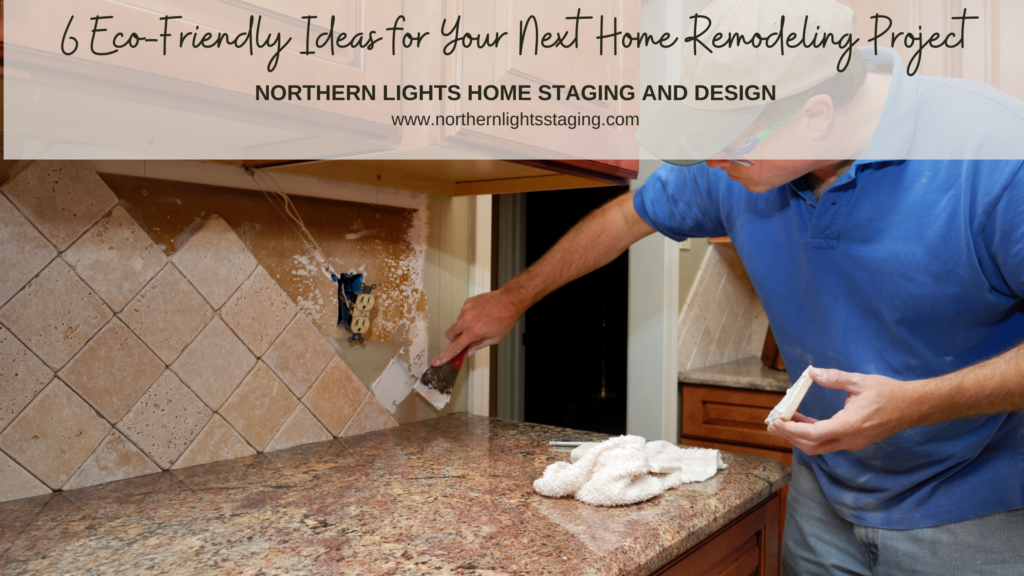
6 Eco-Friendly Ideas for Your Next Home Remodeling Project. Written by Ray Flynn for Northern Lights Home Staging and Design.

Increase natural light

There’s a reason people are drawn to homes flooded with natural light. Sunlight is energizing and uplifting, but you don’t have to go outdoors to enjoy its benefits. Increasing natural light in the home brings the sun indoors and decreases electricity usage, especially in high-traffic areas like kitchens and living rooms.

There are a few ways to bring more natural light into your home, including adding skylights or solar tubes, replacing solid doors with glass, or installing new windows. Talk to an architect to make the best choice for your home’s design.

6 Eco-Friendly Ideas for Your Next Home Remodeling Project. Written by Ray Flynn for Northern Lights Home Staging and Design.

Replace old carpet with green flooring

Carpeting is inexpensive, but those short-term cost savings can lead to long-term consequences. Synthetic carpet releases volatile organic compounds that harm air quality and human health. Synthetic carpeting also won’t biodegrade when it’s eventually thrown away. Natural materials like hardwood, bamboo, cork, and stone or ceramic tile are better flooring options for an eco- and human-friendly home. If you can’t give up the feel of carpet underfoot, choose materials certified with the Green Label or Green Plus Label from the Carpet and Rug Institute.

Redecorate with low-VOC paint

Paint is another big contributor to VOCs in the home. The next time you want to refresh a room’s look, choose a zero-VOC paint like Bioshield or Sherwin-Williams’ Harmony line.

Upgrade to energy-efficient windows

When you’re remodeling to save money and energy, nothing sucks energy worse than old, drafty windows. Upgrading to double-pane windows can save homeowners $126 to $465 a year in energy costs, and springing for energy-efficient windows adds another $27-$111 in yearly savings. In addition to keeping drafts out, energy-efficient windows have coatings that block the sun’s ultraviolet rays, protecting your stuff — and you — from sun damage.

6 Eco-Friendly Ideas for Your Next Home Remodeling Project. Written by Ray Flynn for Northern Lights Home Staging and Design.

Add an energy-efficient laundry room

Laundry rooms increasingly top buyers’ list of most-wanted home features. Turn a corner of the basement into a laundry room, or stack a washer and dryer in a first-floor cabinet for easy access. Upgrade to energy-efficient appliances in the process, choosing an ENERGY STAR washer and dryer to save money on your monthly utility bills.

Install a tankless water heater

Your hot water heater is the unsung hero of your home, providing hot water for baths, dishes, and laundry at a moment’s notice. It’s also one of the biggest energy users. Switching to a tankless water heater can reduce energy consumption 8-34% depending on how much water your family uses, leading to about $100 in annual savings. Not only that, but you’ll never have to worry about running out of hot water again.

Keep in mind that tankless water heaters have lower flow rates than traditional water heaters. As a result, you may need to install multiple tankless water heaters to ensure adequate pressure.

Don’t Forget Your Furnishings and Accessories

You can use eco-friendly Interior Design to include eco-friendly furnishings and accessories in your home. See the article, “Eco-Friendly Interior Design– Why it Matters” by Mary Ann Benoit of Northern Lights Home Staging and Design to learn more.


Eco-Friendly Interior Design- Why it Matters

Eco-friendly home upgrades can seem expensive upfront. However, these home improvements pay for themselves over time. Not only do homeowners save on monthly energy bills, they also get to cash in on the high demand for energy-efficient homes when they sell. Instead of shying away from green remodeling, invest in eco-friendly upgrades the next time you renovate.

Written by guest blogger Ray Flynn of the DiyGuys.net. When he’s not working as a civil engineer, Ray Flynn spends his time dreaming up new DIY projects that promote green living. He created his own website, where you can visit him at diyguys.net.

Need Eco-Friendly Design Help for your next project?

Try my Aligned Design consultation.


A transformational design experience that aligns Art, Science and Energy to Make Magic Happen in your Home and Life. Includes Interior Design, Color and Energy alignment advice to create a space perfectly aligned with you. We'll use Energy Art, personalized to reflect your true self, as the foundation of your space's transformation.


Why Work with Northern Lights Home Staging and Design

Aligned Design©– All Rights Reserved.

Terms of Service  |  Privacy Policy  |  Disclaimer |  Brochure

Prices are subject to change without notice.

Call 907-362-0065 today



Avoid Remodeling Mishaps with This Planning Checklist

Every home remodeling project starts with a vision of the perfect home. But dive into that dream without a plan and, before you know it, you’ll be knee-deep in debt with a half-finished remodel and a home that’s worth less than when you started.

If you want to avoid a home improvement disaster, you need to put as much effort into planning your remodel as you put into picking fixtures and finishes for your dream home. Before you grab the sledgehammer, complete this remodel planning checklist.

6 Steps to Plan Your Home Remodel

Determine Your Budget

The best time to set a budget for your remodel is before you start planning it. Otherwise, it’s too easy to be tempted by premium materials and overspend. Assess your household finances to determine how much cash you can commit to a remodeling project. If financing your remodel, use a loan calculator to see what you can afford based on your desired monthly payment and payoff date.

Prioritize Your Wishlist and Your Home’s Value

Now that you know what you can afford to spend, it’s time to take a hard look at that wishlist you’ve been dreaming up. Cross off any projects that exceed your budget or match it — you’ll want a 20% buffer to cover any unforeseen problems that crop up.

Budget isn’t the only consideration when deciding what to remodel. If you plan to sell someday, prioritize the renovations most likely to increase your home’s appraisal value. According to a guide from Redfin, the right interior upgrades like appliances and flooring are a safe bet. Curb appeal projects such as repainting the front door and adding flower boxes will also help. If you’re wondering whether your project will boost your home’s value, look through the guide to find out.

Avoid Over-Improving

Renovations can improve your home’s value, but only to a limit. If you overimprove your home — that is, push your home’s value beyond your neighborhood’s price range — you’ll have trouble recouping the costs when you sell. Aim to keep your home’s value at or close to the neighborhood average.

Check Zoning and HOA Rules

Depending on where you live, there are restrictions to what you can do with your home. Every city enforces building code requirements, of course, but you may also have to adhere to rules set by your city’s zoning ordinances or your HOA. These mostly apply to changes to the exterior or occupancy status of your home, like installing new siding or converting a garage into an accessory dwelling unit.

Know Which Permits You Need

In general, contractors will tell you when a building permit is required for a remodel, and many procure permits on the homeowner’s behalf. However, there are unscrupulous contractors out there who will skirt legal requirements to save money, so it’s always smart to research permit requirements yourself. Expect to need a building permit for any renovations that involve structural changes but not for strictly cosmetic projects.

Decide Where to Live During Construction

Depending on the extent of the project, it may be possible to live in your home during construction — but don’t expect it to be pleasant. To make living on-site bearable, seal off a construction-free zone with plastic sheeting and turn off your HVAC system to keep dust out. If you won’t have access to the kitchen, equip your living quarters with a microwave, hotplate, and cookware so you’re not stuck dining out for every meal. If living on-site isn’t possible or practical, look into an extended-stay hotel or vacation rental, or bunk up with friends and family.

With these planning steps complete, you’re ready to start interviewing contractors for your home remodel. You’ll be working with your contractors for a while, so choose a company with an outstanding reputation and an understanding of your vision. With a great plan and an even better team by your side, your home remodel will be a great experience.

Written by guest blogger Ray Flynn of the DiyGuys.net. When he’s not working as a civil engineer, Ray Flynn spends his time dreaming up new DIY projects that promote green living. He created his own website, where you can visit him at diyguys.net.


Need Help with Your Remodeling Project

Whether it is helping you pick paint colors or finishes, select one of my online services to meet your needs.


Edesign and Online Services of Northern Lights Home Staging and Design


Why Work with Northern Lights Home Staging and Design

Aligned Design©– All Rights Reserved.

Terms of Service  |  Privacy Policy  |  Disclaimer |  Brochure

Prices are subject to change without notice.

Call 907-362-0065 today