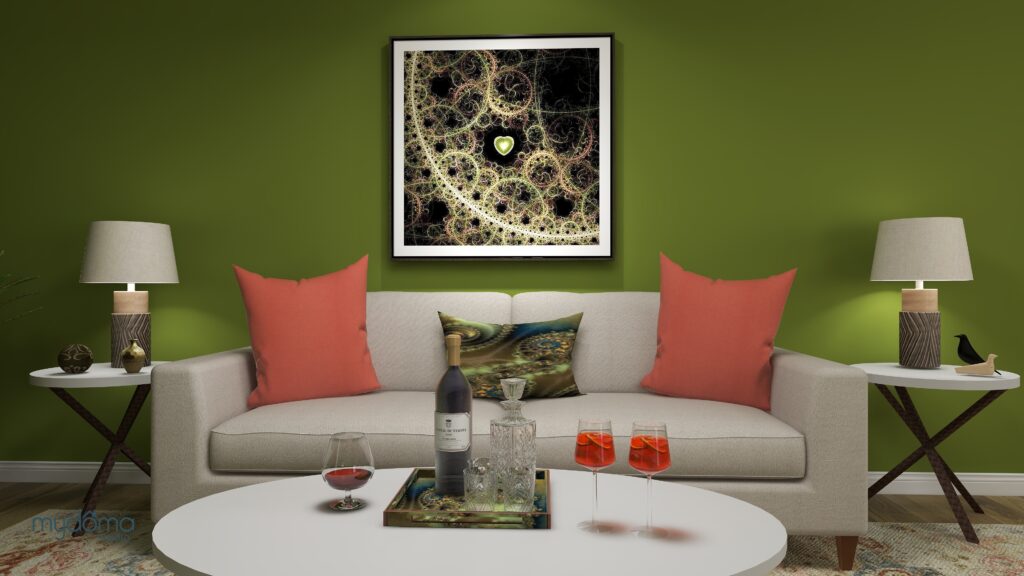
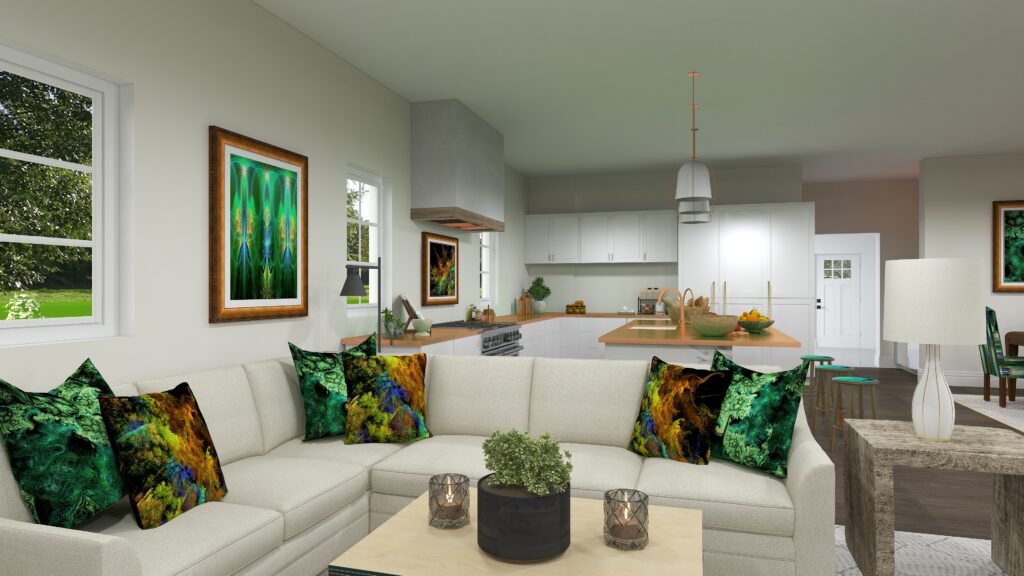
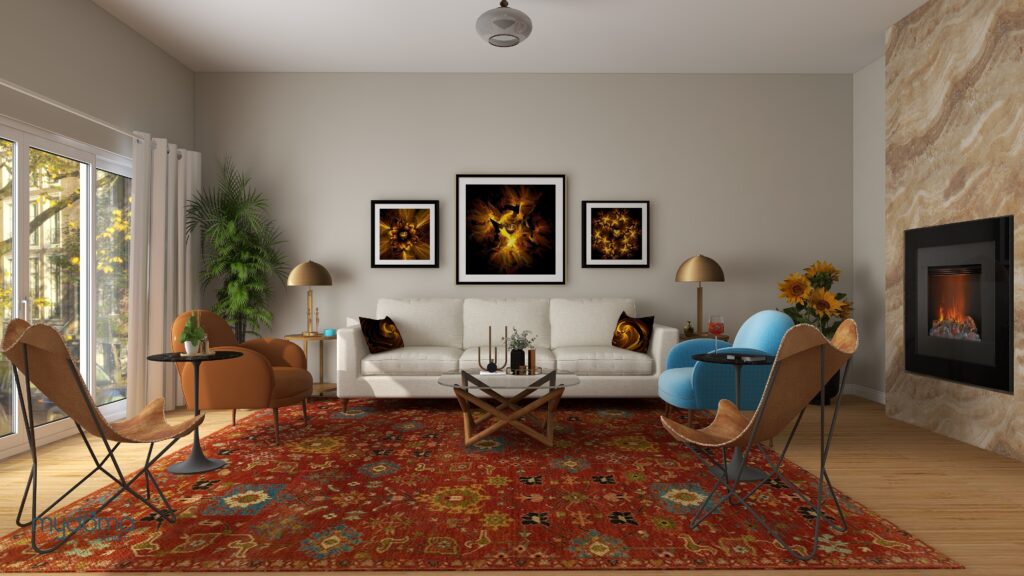
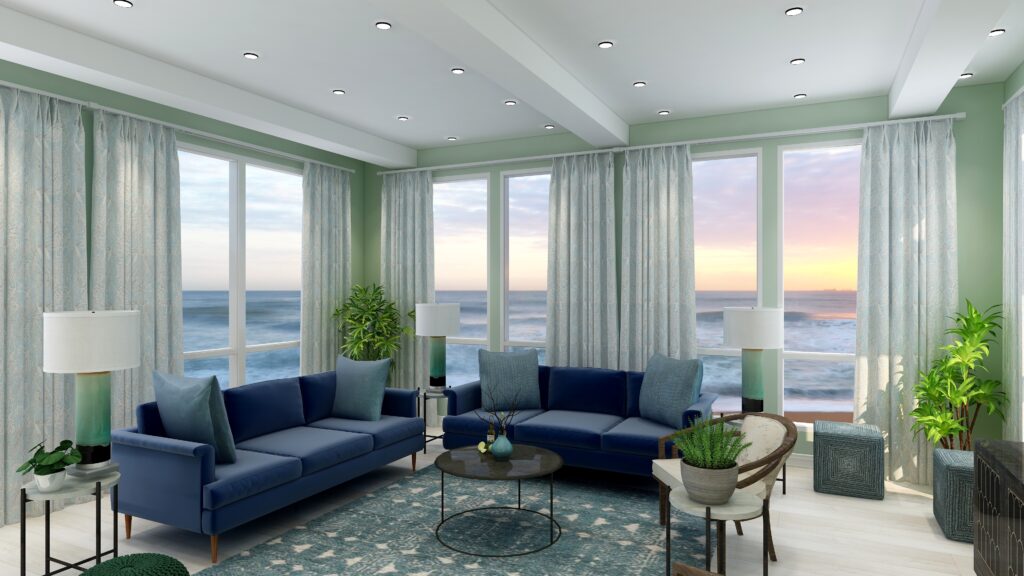
As humans, we want to be connected with nature and other living things such as people, animals, and plants because it makes us feel good. This longing for “connection” is called “biophilia”.
There are numerous ways that we could use Interior Design to get that connection for a happier, healthier home including using natural materials, plants, animals, color, art, scents, and lighting.
Some tips include”
Bringing the outdoors “in” through the use of design, strategic window placement, and use of colors that harmonize with the outdoor environment. Use your outdoor windows as indoor “art”.
Using the colors of nature in your home such as blues, greens, browns, off whites and grays since they are prominent in trees, shrubs, the sky and water.
Using color from your outdoor landscaping visible from your windows in your color scheme.
Using art that shows landscapes, plants, animals, or other natural elements.
Designing to make it easy to live with pets such as pet-friendly upholstery, washable rugs, etc.
Creating exterior landscapes that are visible through your windows and are beautiful, colorful, smell great, and attract wildlife.
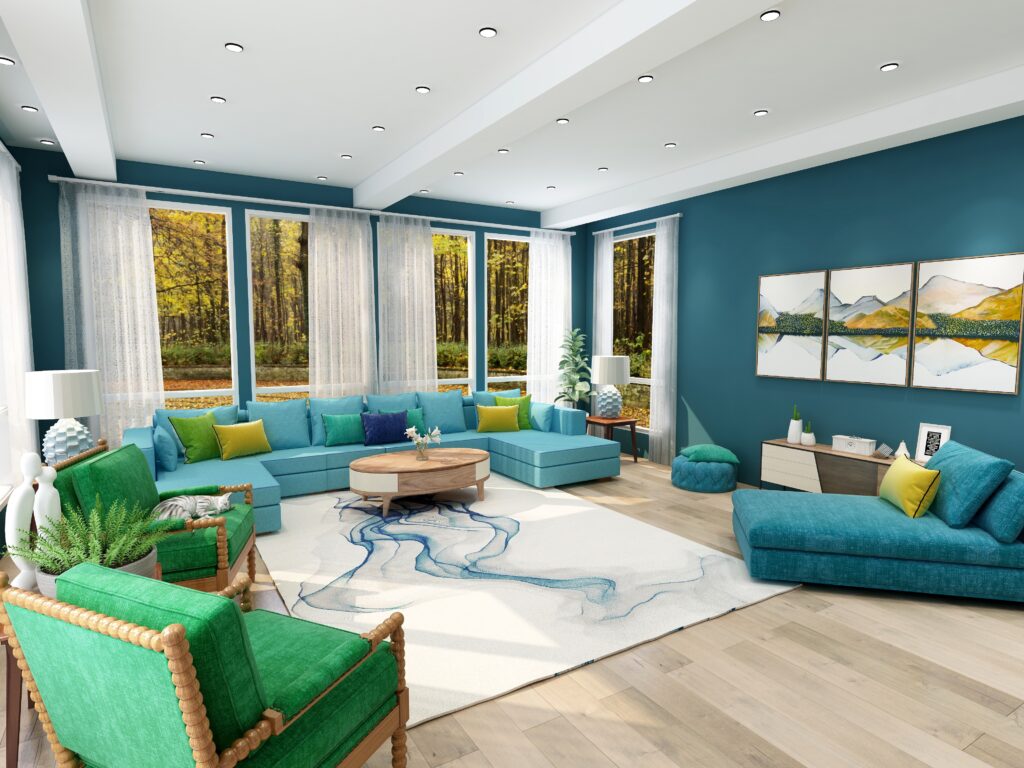
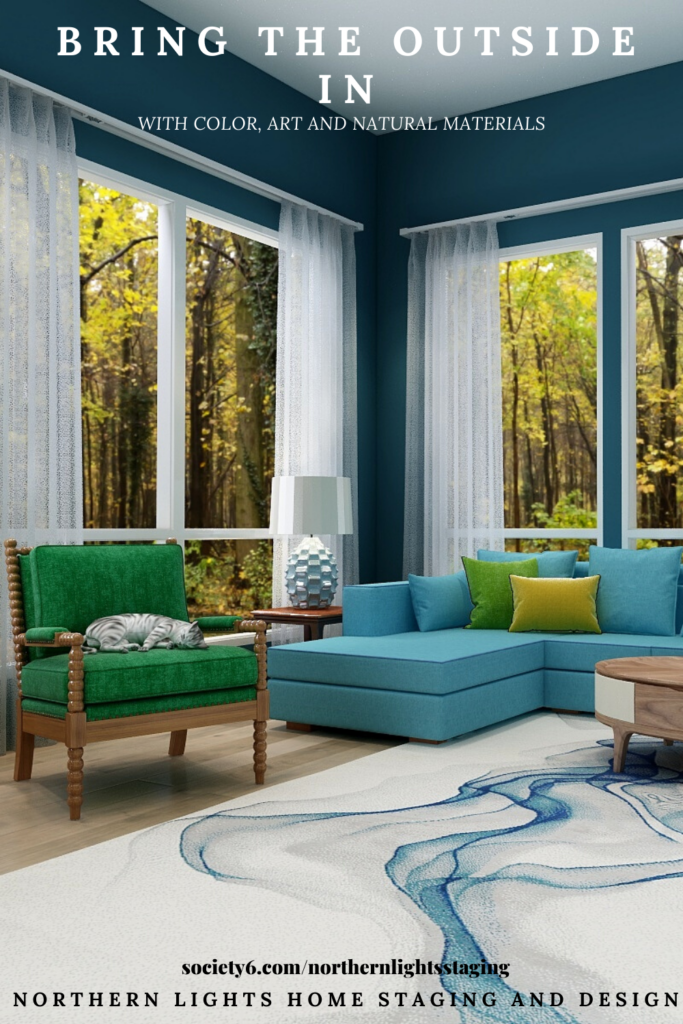
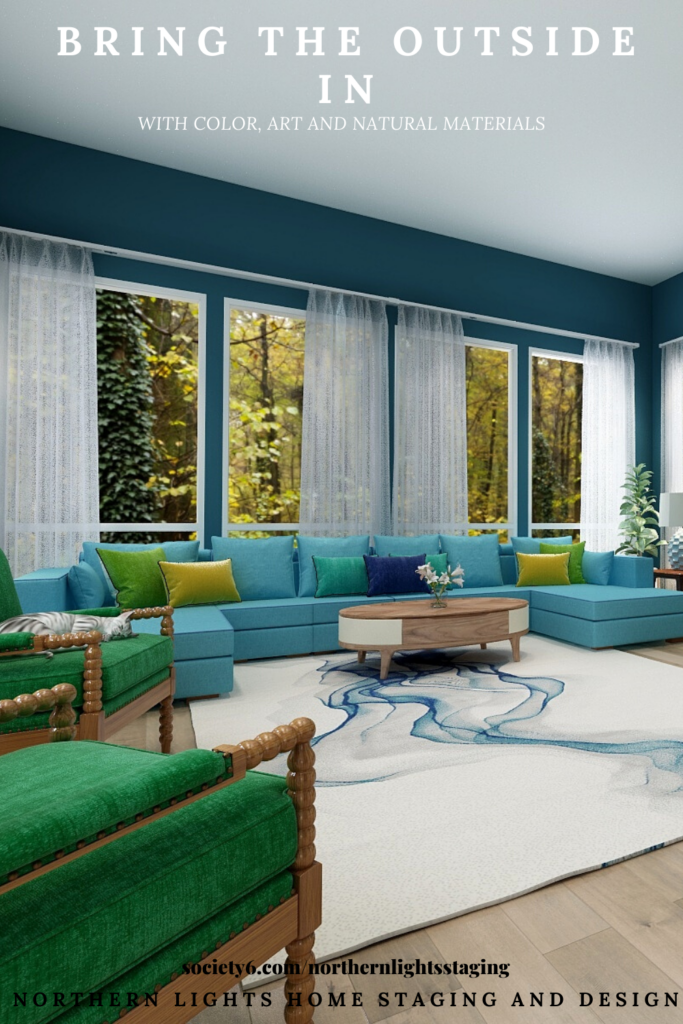
This Edesign for a global style living and dining room is a nice example of how to apply some of these ideas.
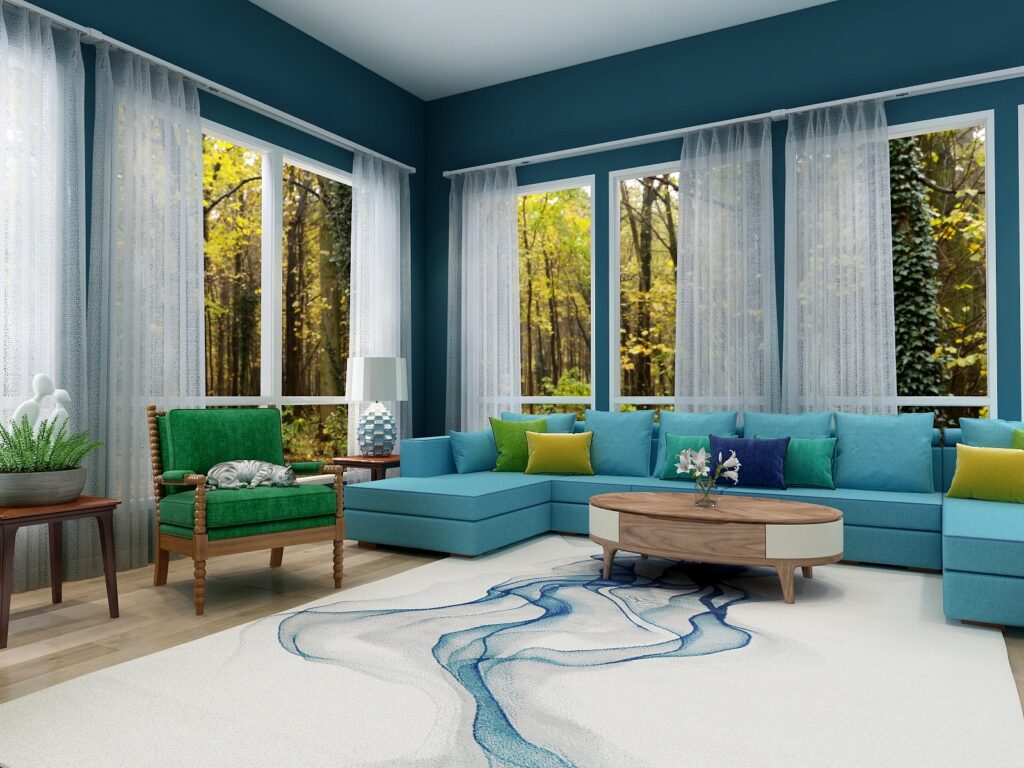
Global Style Living Room by Northern Lights Home Staging and Design. Bring the Outdoors In.
In this design, the windows and beautiful views of the forest provide the perfect indoor “art” and create a focal point and color scheme for the design.
The color palette from this “art” or view includes greens, yellows, browns and blue from the sky which are incorporated in the furniture, pillows and wall color. Various shades of green are used to highlight the various shades outside. The area rug creates the illusion of flowing water.
The art shows a natural mountain landscape showing yellow birch trees similar to what is in the outdoor landscape.
The furnishings use pet friendly materials, and as you can see, makes it comfy cozy for pets such as the kitty on the chair.
The décor includes plants and flowers.
The furnishings and flooring are wood and include different wood types and colors for variety.
The window treatments allow in natural light and are simple in color and pattern to keep the focus on the outdoor view.
The lamps use the shape and pattern of a natural element (pineapple).
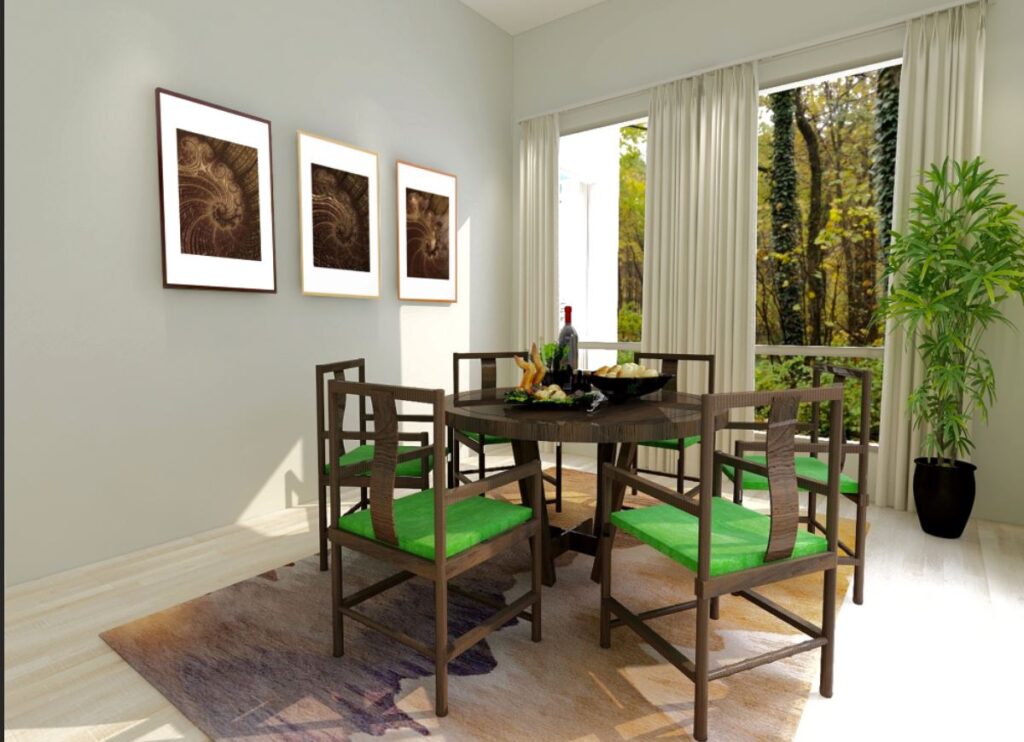
Global Style Living Room by Northern Lights Home Staging and Design. Bring the Outdoors In.
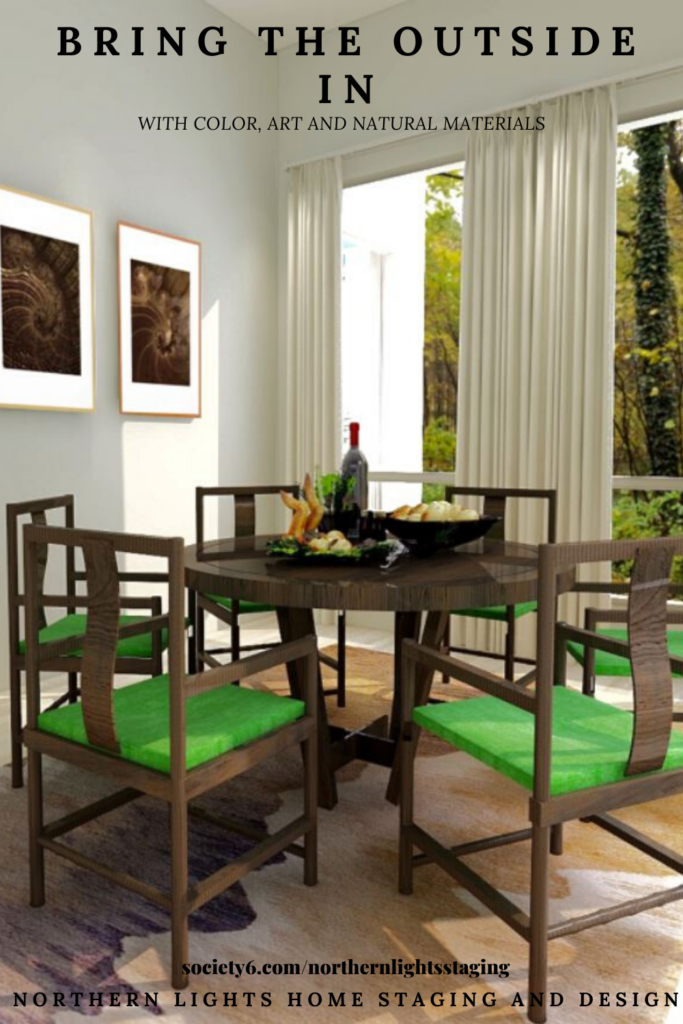
In the adjacent dining room, the forest theme continues.
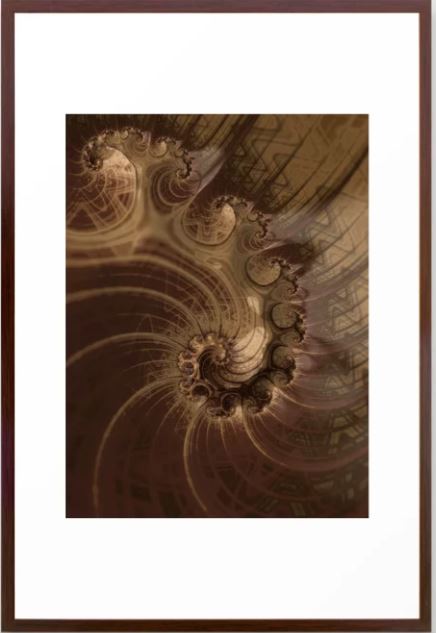
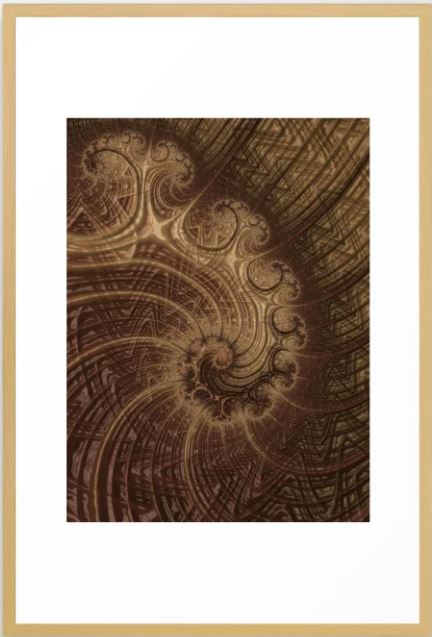
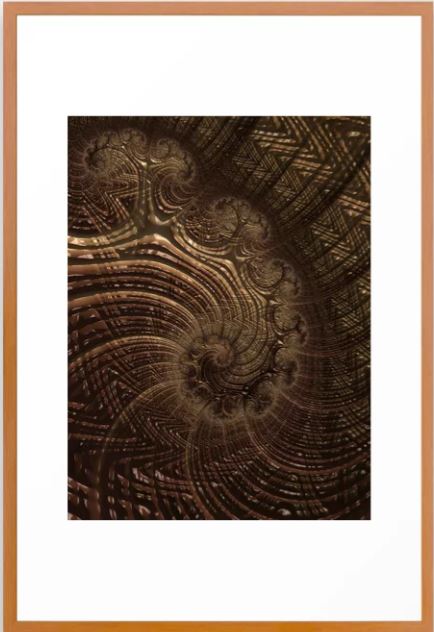
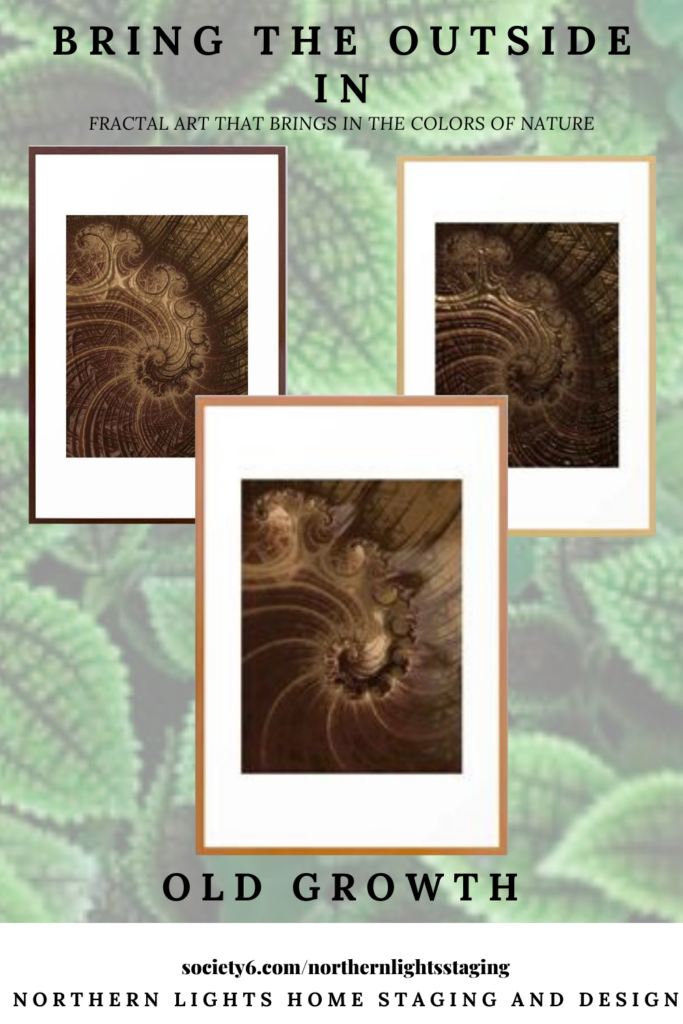
In this room, the browns of the forest are highlighted in the wood of the chairs and table the area rug with various shades of brown on the wood floor and the art. The fractal art which I designed is part of my “Old Growth” series I developed because it reminds me of the colors and patterns of an old growth forest. Each frame is in a different wood tone.
Global Style Dining Room by Northern Lights Home Staging and Design. Bring the Outdoors In. Old Growth Old Growth #2 Old Growth #3
The greens in the chair cushions add a pop of color and harmonize with the outdoor view and the living room colors. The décor includes plants.
The wall color here and window treatments are neutral to keep the focus on the outdoor views and the art.
Overall, this design is simple, affordable to create using color, natural elements such as wood and plants and art that highlights nature. The overall feeling is one of serenity with a focus on the amazing forest views. The look of this room will change as the seasons change and the yellow from the fall foliage changes to green, but it will still look great.
Ready to Bring the Outside in To Your Home?
Need help with your home? Try my Aligned Design consultation or my Design Coach package.
Stay Warm This Winter and Slash Bills with These Home Efficiency Upgrades
Stay Warm This Winter and Slash Bills with These Home Efficiency Upgrades
Do you ever feel like it’s impossible to stay warm in the winter without spending a fortune on energy bills? If this sounds familiar, you may be surprised by how easy it can be to heat your home more efficiently. Smart home tech is one of our favorite solutions, but it’s not the only option. From high-tech devices to small changes in everyday habits, there are countless ways to boost your home’s efficiency — and make electric bills more manageable this winter.
Don’t Fight Mother Nature!
When winter hits, our natural inclination is to fight the cold by cranking up the heat indoors. This can be an uphill battle, but accepting the season for what it is — and even working with Mother Nature — can increase your home’s efficiency dramatically. One example is how the sun provides warmth year-round, even when the air temperature is cold. For this reason, an easy way to reduce heating costs is to open window coverings on sunny days, especially on any south-facing windows, because the natural warmth from the sun means less work for your heating system. Along the same lines, most people could change other small habits, such as closing the doors to any seldom-used rooms and keeping the vents in those rooms closed.
The bottom line is that your furnace has to work hard to keep your home nice and toasty, but you can give your heating system a break by changing your habits and by making efficient upgrades. Another easy change is to keep your thermostat set a little lower. Any programmable thermostat will work, but with a smart thermostat, you have even more control to adjust it as needed. For example, if your whole family is out of the house most of the day, keep it set lower during those hours, and you can easily raise the temperature when needed.
Insulate Everything
Besides heating the air inside efficiently, it’s important to keep cold air out. The best way to do this is to ensure your home is insulated properly. If you’re up for a DIY project, Family Handyman has an excellent guide for how to install insulation yourself. As they explain, installing insulation correctly is a major factor in how effective it is.
Along with boosting the insulation in your attic, don’t forget about insulating other spots that are easy to overlook. For example, Money Talks News recommends insulating attic doors along with your basement and other sneaky spots, such as electrical outlets and heating ducts. In addition to adding insulation, another essential step for keeping cold air out is to seal off leaks. According to the blog Direct Energy, an easy way to identify air leaks is to go room by room and either use your hand to feel for air or use a candle to see where the flame flickers. Doing this works best on a windy day, and you’ll want to turn your heating system off. Then, you can add caulk, foam, or weather stripping wherever it’s needed.
Target Other Energy Hogs
Heating may be the main culprit that drives up winter utility bills, but it probably isn’t the only source of increased energy use. When the sun sets earlier, it’s normal to compensate by using more indoor lighting. Not to mention, it’s awfully tempting to warm up in the winter by taking a hot bath or an extra long shower. The good news is that it’s easy to make these habits less costly. For example, switching to LED bulbs makes lighting more efficient. Getting a new tankless water heater will make those warm showers more eco-friendly. Alternatively, you can simply set your old water heater to a lower temperature.
The reality is that energy consumption is part of our everyday lives. That’s a fact that’s unavoidable, but what you can avoid is wasted energy. Whether you make small changes or big home improvements, each of these swaps will cut down on waste, all with the added benefit of cutting your utility bills at the same time.
Eco-friendly Interior Design is a great thing to think about in all aspects of creating a healthy, cost efficient and beautiful space. Besides being energy efficient using tips as in the article above, you can incorporate natural and eco-friendly materials in your decor. See my article, Eco-friendly Interior Design- Why it Matters, to learn more. Try my Aligned Design consultation to come up with an eco-friendly design plan for your space.
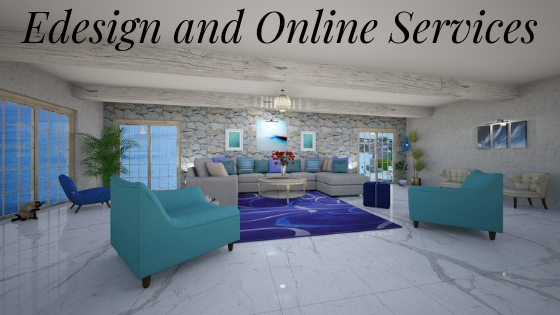
Need help creating a beautiful and eco-friendly design in your home? See my Edesign and Online Services and let me know if I can help you!.
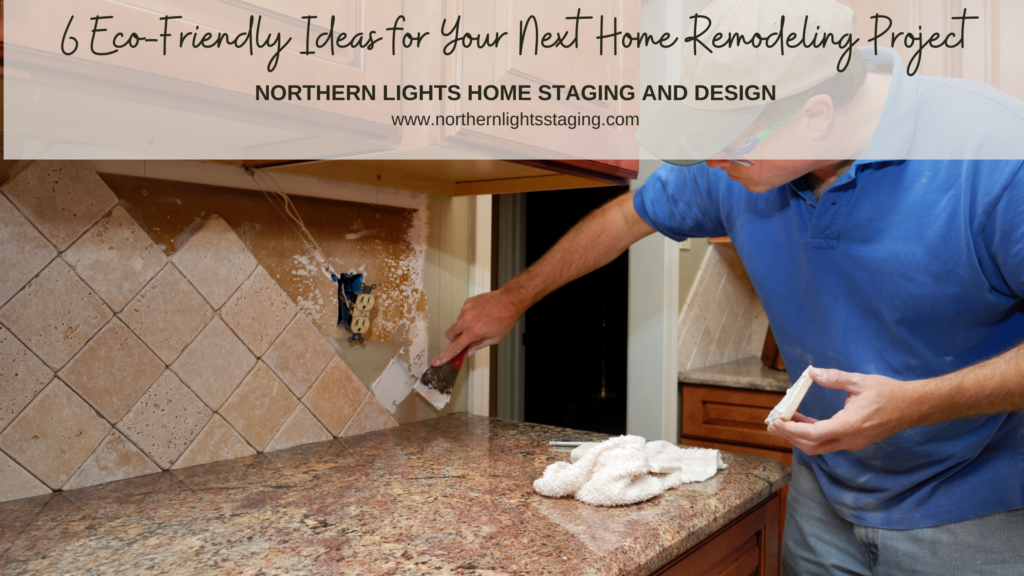
6 Eco-Friendly Ideas for Your Next Home Remodeling Project
Whether you’re committed to reducing your carbon footprint or simply want a safe, healthy home for your family, eco-friendly remodeling is a smart choice. Eco-friendly home improvements save money and energy, and limit the amount of harmful toxins that enter your home. Eco-friendly homes also command a premium when it’s time to sell; according to the Midwest Energy Efficiency Alliance, energy-efficient homes net 3.5% to 9% more per square foot than typical homes.
As you plan your next remodel, consider investing in one of these eco-friendly home improvements.
Increase natural light
There’s a reason people are drawn to homes flooded with natural light. Sunlight is energizing and uplifting, but you don’t have to go outdoors to enjoy its benefits. Increasing natural light in the home brings the sun indoors and decreases electricity usage, especially in high-traffic areas like kitchens and living rooms.
There are a few ways to bring more natural light into your home, including adding skylights or solar tubes, replacing solid doors with glass, or installing new windows. Talk to an architect to make the best choice for your home’s design.
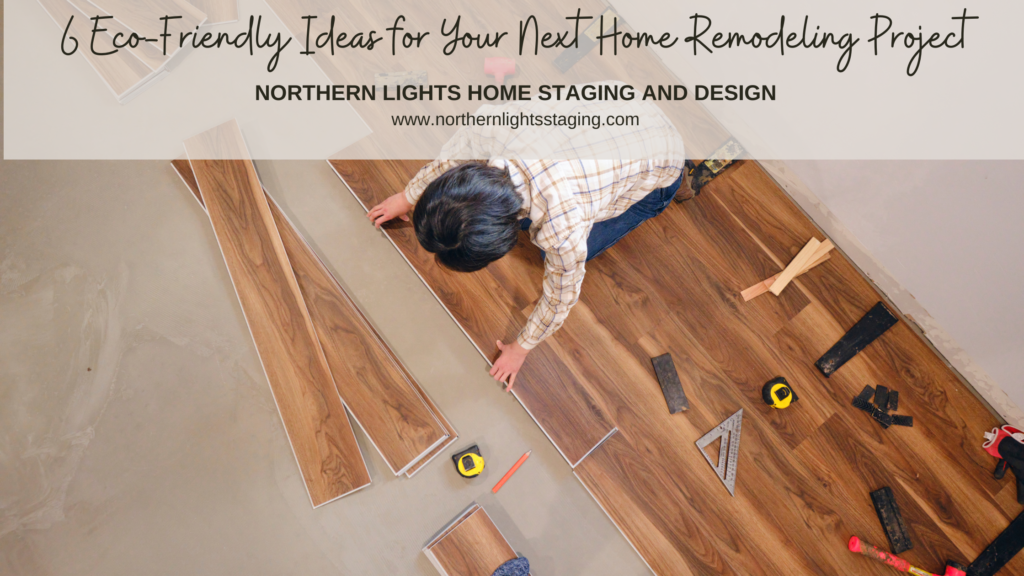
Replace old carpet with green flooring
Carpeting is inexpensive, but those short-term cost savings can lead to long-term consequences. Synthetic carpet releases volatile organic compounds that harm air quality and human health. Synthetic carpeting also won’t biodegrade when it’s eventually thrown away. Natural materials like hardwood, bamboo, cork, and stone or ceramic tile are better flooring options for an eco- and human-friendly home. If you can’t give up the feel of carpet underfoot, choose materials certified with the Green Label or Green Plus Label from the Carpet and Rug Institute.
Redecorate with low-VOC paint
Paint is another big contributor to VOCs in the home. The next time you want to refresh a room’s look, choose a zero-VOC paint like Bioshield or Sherwin-Williams’ Harmony line.
Upgrade to energy-efficient windows
When you’re remodeling to save money and energy, nothing sucks energy worse than old, drafty windows. Upgrading to double-pane windows can save homeowners $126 to $465 a year in energy costs, and springing for energy-efficient windows adds another $27-$111 in yearly savings. In addition to keeping drafts out, energy-efficient windows have coatings that block the sun’s ultraviolet rays, protecting your stuff — and you — from sun damage.
Add an energy-efficient laundry room
Laundry rooms increasingly top buyers’ list of most-wanted home features. Turn a corner of the basement into a laundry room, or stack a washer and dryer in a first-floor cabinet for easy access. Upgrade to energy-efficient appliances in the process, choosing an ENERGY STAR washer and dryer to save money on your monthly utility bills.
Install a tankless water heater
Your hot water heater is the unsung hero of your home, providing hot water for baths, dishes, and laundry at a moment’s notice. It’s also one of the biggest energy users. Switching to a tankless water heater can reduce energy consumption 8-34% depending on how much water your family uses, leading to about $100 in annual savings. Not only that, but you’ll never have to worry about running out of hot water again.
Keep in mind that tankless water heaters have lower flow rates than traditional water heaters. As a result, you may need to install multiple tankless water heaters to ensure adequate pressure.
Don’t Forget Your Furnishings and Accessories
You can use eco-friendly Interior Design to include eco-friendly furnishings and accessories in your home. See the article, “Eco-Friendly Interior Design– Why it Matters” by Mary Ann Benoit of Northern Lights Home Staging and Design to learn more.
Eco-friendly home upgrades can seem expensive upfront. However, these home improvements pay for themselves over time. Not only do homeowners save on monthly energy bills, they also get to cash in on the high demand for energy-efficient homes when they sell. Instead of shying away from green remodeling, invest in eco-friendly upgrades the next time you renovate.
Written by guest blogger Ray Flynn of the DiyGuys.net. When he’s not working as a civil engineer, Ray Flynn spends his time dreaming up new DIY projects that promote green living. He created his own website, where you can visit him at diyguys.net.
Need Eco-Friendly Design Help for your next project?
Indoors, both at home and at work. All the things in our indoor environments can affect our health. While we probably don’t have much say about our work environments, we can totally control what is in our homes, and we can use those things to make our homes both beautiful and healthy at the same time!
Furniture, rugs, upholstery, flooring cabinets and paint all affect our indoor air quality. Some of the chemicals used to keep us safe, such as flame retardants in synthetic fabrics and rugs can also be hard on our health. Chemicals in some carpeting and flooring off-gas into the air. Adhesives used in furniture, especially particle board, contain formaldehyde that emit harmful substances into the air.
Ways to Create a Healthy Interior Space
How can you reduce or eliminate the negative effects of common products that can affect our health and still have a beautiful home?
• Buy higher quality furniture that uses wood joinery and fewer adhesives.
• Get rugs made of natural materials such as wool, cotton, silk or jute.
• Paint with brands that use fewer chemicals (low VOCs). VOCs are compounds that evaporate into the air and smell bad and are bad for indoor air quality. Benjamin Moore makes a low VOC paint in their Natura collection in all their fabulous colors with reduced levels of allergens and irritants.
• Purchase furniture with upholstery that does not use fire retardant chemicals.
• Purchase furniture that uses foam made of natural materials such as latex.
• Go for furniture and décor items made of wood or metal and avoid plastics.
• Look for pillows, mattresses, upholstery and beddings made from wool-stuffed materials rather than synthetics.
• Consider flooring made from natural materials such as stone or wood and avoid vinyl.
• Give your space plenty of natural light and fresh air.
• Add plants to add beauty and filter your air.
• Use natural cleaning products.
• Use natural materials and objects from nature as decoration.
• Use rammed earth or adobe for walls instead of plaster or cement.
• Use rubber walkways made from recycled rubber outdoors rather than concrete
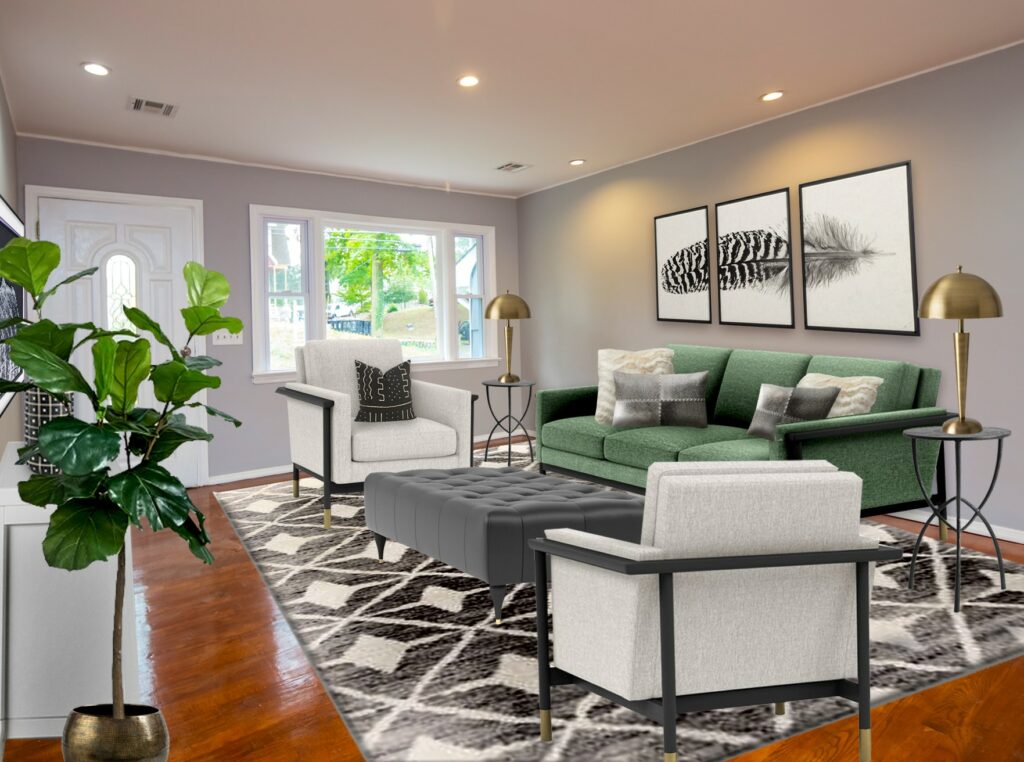
Modern Global Style Edesign and eco-friendly art by Northern Lights Home Staging and Design
How Your Choices Help the Planet
Besides actions you take to improve the air quality directly in your home, consider how your choices affect the health the planet too!
• Buy high quality, long lasting furniture rather than cheap low-quality stuff that will end up in landfills or on the street as “free stuff” in a few years. Many cities are being overwhelmed with furniture no-one wants.
• Find local products so that the shipping doesn’t contribute to emissions in the environment.
• Use energy efficient lighting.
• Use vintage items.
• Use products made of recycled materials such as glass tiles or paper wallpaper. You can use glass in your countertops, tiles, lamps and accessories and paper for beautiful wall coverings. Even some polyester can be recycled. If you must use polyester, use rPET which can be spun into yarn and dyed without toxic properties.
• Use renewable or sustainable materials such as bamboo, cork, teak, hemp, palm, soy fabric or cotton. Bamboo is used in fabrics, flooring and window treatments. Cork is used in textiles, floor and wall coverings. Teak is used in furniture and decking. Hemp is used in furniture upholstery, bedding, curtains and paper products. Soy fabric is soft and silky. Palm is used in some baskets. Organic cotton can be used for upholstery fabric, bedding, pillows and more.
• Use sustainable metals that can be recycled such as copper, aluminum and steel.
• Use solar energy for your home.
Modern Global Style Edesign and eco-friendly art by Northern Lights Home Staging and Design
Get the Look- Eco-Friendly Design.
So, what does eco-friendly design look like?
It can really reflect any style that you want. Most of the eco-friendly furniture produced is in a more modern style with fabrics in a wide range of colors and uses beautiful natural wood and bamboo.
Ethnic rugs, pillows and decorative accessories are often made of natural materials and can create a global style or Bohemian look.
Whether you are starting fresh with a new home or redoing a whole room, consider making it eco-friendly. Or add eco-friendly elements as you update your look over time.
Modern Global Style Edesign and eco-friendly art by Northern Lights Home Staging and Design
Eco-Friendly Furniture and Decor
It is easy to find beautiful sustainable products for your home décor. Sometimes these products may cost a little bit more, but it is worth it!
Modern Global Style Edesign by Northern Lights Home Staging and Design
Ready to Create a Beautiful Eco-Friendly Space?
My approach to interior design, termed “Aligned Design,” revolves around three pillars: art, science, and energy. The sweet spot is where they intersect.
Color is central to the science of this design. As a certified color strategist, I harness the science of color to bring unique vibrancy to spaces.
Begin with the Aligned Design blueprint, blending art, science, and your home’s energy. By fusing creativity with color and connection, we can craft your ideal space together.
Now that 2019 is in the rear-view mirror, I decided to look back and see what I did with all my time, what I accomplished and consider what’s ahead. Have you done the same? I hope the last year was all you hoped for!
What the Heck I did with my time
For me, 2019 this was especially meaningful as I retired last December 31st from a 33-year career as a wildlife biologist. Although I started Northern Lights Home Staging and Design five years ago, I had more time to work on my design business in 2019. A big change was the decision to offer Edesign, or online Interior Design, online color and home staging consultations and virtual staging. Living in small town Alaska, I have a limited market and thought this would be a great way to expand my ability to help more people. So 2019 was a year of learning how to do Edesign and work with clients in a new way.
Colorful Projects
The year was filled with home staging, virtual staging, color consultations, local design projects and Edesign. When doing consultations or working with people taking their time to implement their design or staging, I don’t always get to see the “After” photos. Here is a video of my favorite projects where I did see the result. It was a very colorful year!
Cool Things
Some other exciting things that happened in 2019 were that:
I won the “Best of Houzz” for Customer Service again for the 4th year in a row.
I was awarded Best Interior Designs of 2018 and noted as an Interior Designer to Watch in 2019 in an article by Searchmetry.
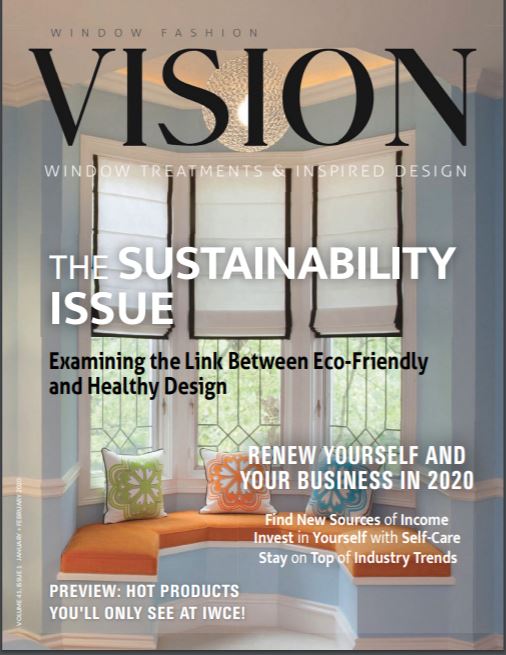
One of my Edesigns was published in an international magazine! See the article, 5 Things You Need to Know About Edesign by JoAnne Lenart-Weary on page 50, and my design on page 55.The picture below is my design. More on how it came together in a future blog post. (shown below).
Edesign in Vision Magazine by Mary Ann Benoit of Northern Lights Home Staging and Design.
So Much Writing!
In 2019, I posted articles and tips on Facebook, Instagram, Twitter and Pinterest daily and wrote weekly blog posts compared to monthly in 2018. I did my best to provide information that you might find valuable on Interior Design, Color and Home Staging. I hope you will follow me and find some information helpful to you.
Here are some of my favorite blog articles which I think really tell the story of what I can do to help you.
In discovering Edesign, I also discovered some things about myself.
I LOVE color. Well, I already knew that, but Edesign gave me a chance to indulge my love of color, challenge myself and delve deeper into using the art and science of color I learned when I became a certified color strategist.
I LOVE global style and the layering of textures, handmade and exotic art and decor, eco-friendly materials, the history and culture, magic of lighting, rich colors and so much more!!
I LOVE eco-friendly, sustainable design. I realized how important it is to our health, well-being, and our planet and how easy it is to create beautiful and unique designs with eco-friendly elements.
I LOVE Edesign. It’s fast, affordable, unique and opens doors to working with anyone with a computer (is there anyone without one?).
What’s Next?
Now that I know more about the things that make my heart sing, and hopefully yours too, I plan to do more of the things I love! The current design trends are embracing color, global styles, eco-friendly design and new ways of doing things such as Edesign and I am ready to spread the love! Are you ready? Check out my blog article, Re-Invent Yourself and Your Home in 2020 to get inspired!
As the new year approaches, you will probably hear a lot about trends in design, color and the latest, greatest ideas in furniture and accessories. My mind is focused inward on a different way of transforming your home.
I think about 2019, what I accomplished and what my life and home felt like. I’m compelled to plan for 2020 to re-invent my life, health, business and home to be the ideal expression of myself. How about you?
I have been inspired lately listening to Jim Fortin’s podcast, “Transform your life from the inside out”, and watching videos by Dr. Joe Dispenza. They both talk about how to re-program your brain to transform your life by working from the inside out. Jim Fortin talks about the idea of HAVE, DO, BE that most of us operate from. If I only “had” that, I could “do” this and “be” happy. He says it should be the other ways around. BE, DO, HAVE. BE your ideal self so you can DO the things you want to and the “HAVE” will come as a result. Start on the inside and work your way out. Dr Joe Dispenza talks about how re-programming your brain through meditation can totally change your life, health and more. Change your thoughts, which change your emotions which change your physiology. I know, a little Woo Woo perhaps, but you never know until you try. It’s a new year, what can it hurt!
As a designer, I can’t help but think about how all this translates to your home, and how transforming your home from the inside out can affect the way you feel and can help re-invent your life too. Is it time for you to make a change? If so, how do you do it?
Color
The easiest way is by changing your colors, which have a profound effect on how you feel. There is lots of information online about the psychology of color and how different colors make you feel for inspiration. Color is easy to change! And so, it is easy not to change. How long have you had the same colors in your home? Change the paint color of a main room, change the color of your accessories, put up new and colorful art, change your pillow colors, get a new area rug.
Because color is easy to change, it’s easy to change again if you don’t like it. Be brave and go for it. Forget about grays, whites and neutrals. Try something bolder, or one of the new 2020 colors of the year. Or, if you prefer neutral colors on your walls, add pops of color in other ways. Maybe you have a bold color scheme going on now that you could change if you want a calmer and more serene environment.
Most people get stressed out about picking new colors. What colors go together? What if I hate it? Who has time to paint? What if my friends don’t like it? The only thing that matters is if you like it and it makes you feel good. Tell your own story. Of course, it is always great if the colors work well with your home and fixed finishes. A certified color strategist can help you with that.
Get Rid of the Monkey Chatter
What??? Yes, monkey chatter. Jim Fortin talks about how our brains are filled with monkey chatter, the endless thoughts of our past and current problems, and negative things we say to ourselves and others all day long. In other words, our heads are filled with X#$%@ most of the day. How can we re-invent ourselves with all that mental clutter?
This of course makes me think of our homes and all our clutter (me included). When we get rid of it, just like in our minds, doesn’t it feel so good? Remove the clutter, let the things you love have a place of honor with room to breathe so they shine, and you can enjoy them more. Maybe switch a few things out so something different (like art, accessories or a treasure) has a chance to take center stage.
Be Here Now
Yes, more Woo Woo:). Part of my re-invention involves learning to meditate. I’m finding this hard due to all the monkey chatter. They really are annoying?. The key is to tell the monkeys to be quiet, get centered, relaxed and calm. I feel much more relaxed and calmer in a space that is clean, organized, and not overwhelmed with stuff. Part of my re-invention continues to include getting rid of more stuff!
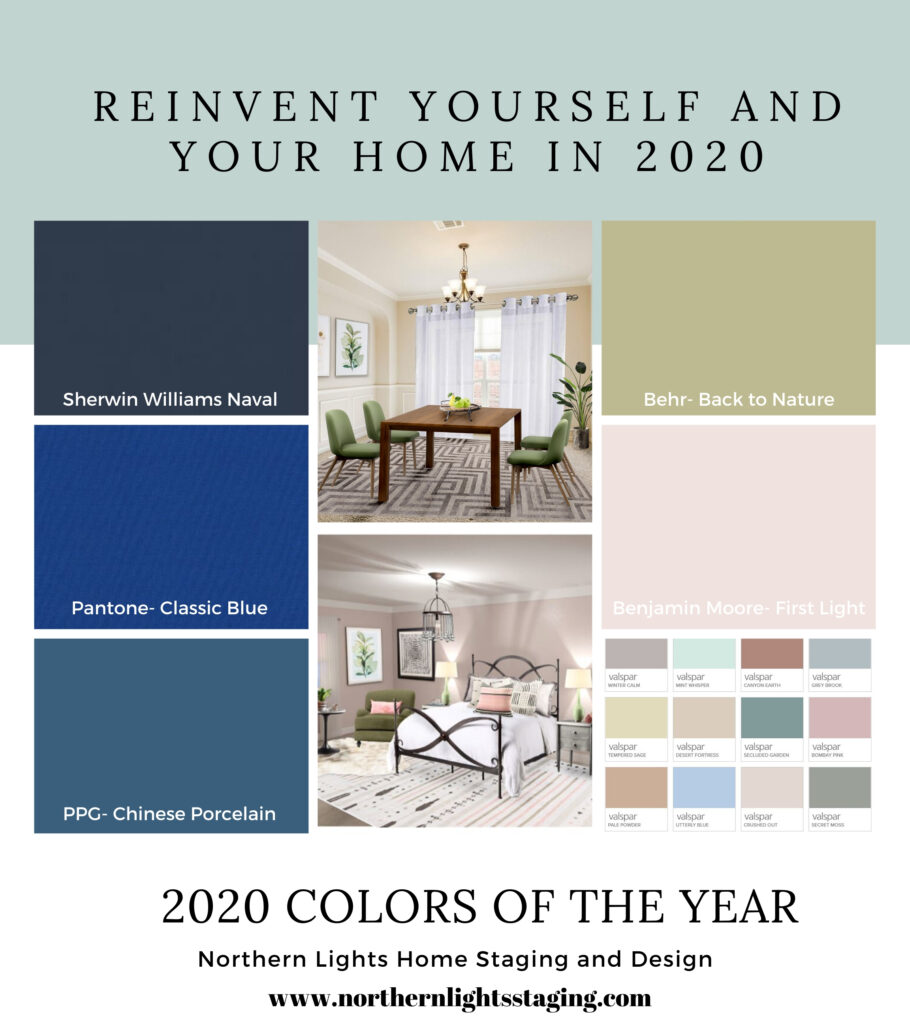
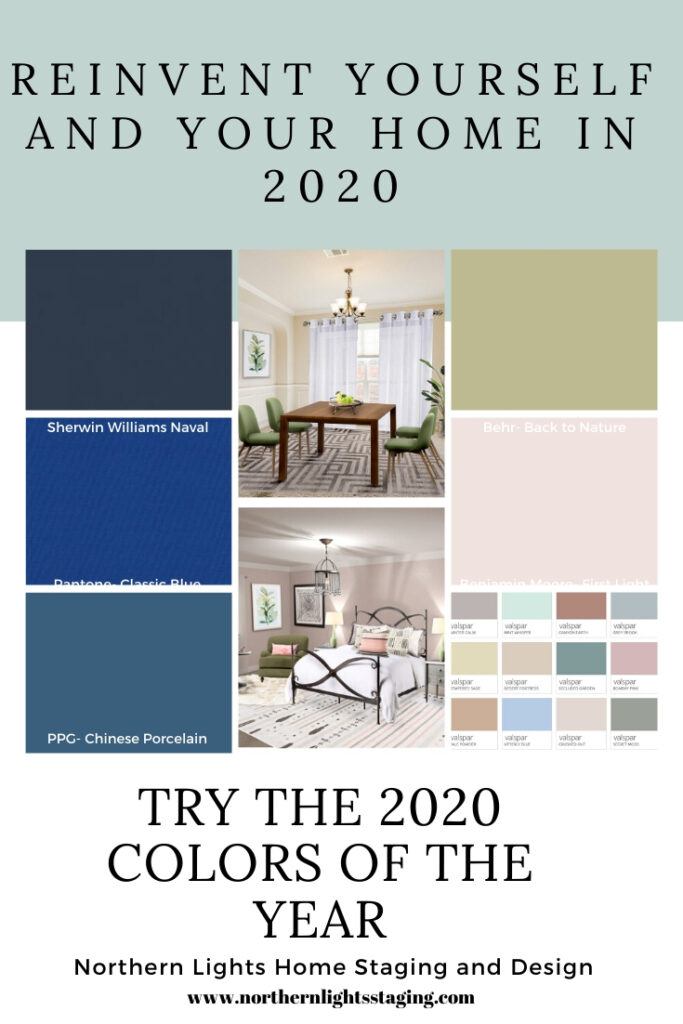
Color can also create a calm environment. Benjamin Moore’s 2020 color of the year First Light (a soft blush pink) is a calm, relaxing color that is great for a bedroom. Sherwin William’s 2020 color of the year Naval (dark navy), is described as a “rich navy that creates a calm and grounding environment infused with quiet confidence”. Sherwin Williams says that “Naval merges the desire for rich, inspiring color with our yearning for relaxation and retreat.” Even Pantone’s color of the year, Classic Blue, is described as a shade that would “bring a sense of calm to our fast-paced, technology-filled world”. “Reminiscent of a twilight sky, the deep shade of blue evokes a tranquil feeling.” Deep blue is considered one of the most soothing shades. PPG’s color of the year Chinese Porcelain, is also a deep blue, described as “a shade of blue that instills calmness, reduces anxiety, and encourages sleep”. “This soothing blue imparts slowness, encouraging consumers to practice mindfulness and be more present in their lives”. Sounds like these paint companies were thinking about getting rid of the monkey chatter too!
Get Connected
One benefit of meditation is to connect to something greater than yourself. The universal energy. Get comfortable with yourself and then connect with everything around you and the energy of other living things. This need for connection with other living things is called “biophilia”, which I will write more about in an upcoming blog article. In terms of home design, to me that means “bringing the outside in”. One way to do this besides having lots of windows with views of nature is again, with color. Behr’s 2020 color of the year Back to Nature is a nice green they describe as a “restorative and revitalizing green hue that engages the senses and pairs well with other colors both inside and outside your home”. Classic Blue, Pantone’s 2020 color of the year, described as the color of “twilight” can also work. Valspar came up with 20 colors of the year for 2020, in shades of pinks, greens and neutrals all based on nature.
If you decide to try one of the “colors of the year”, most vendors in the design industry are in tune with these colors so it is easy to find furnishings, accessories and art to work with them.
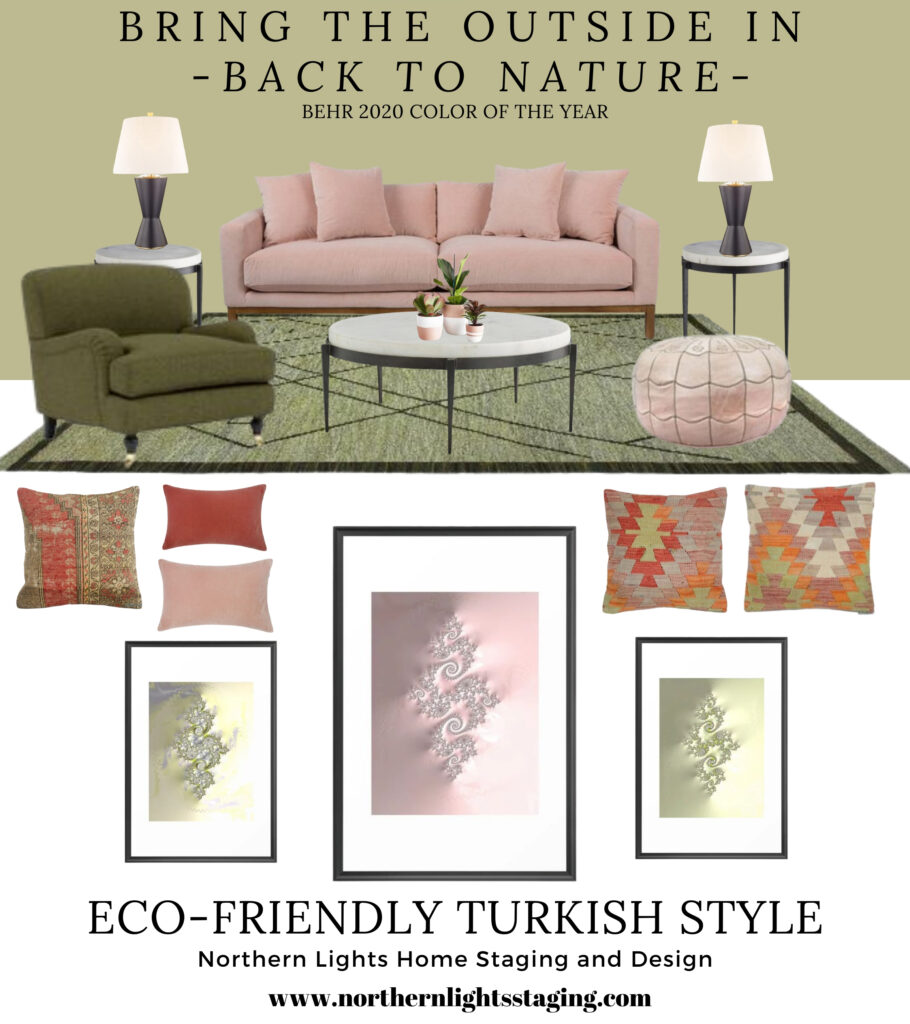
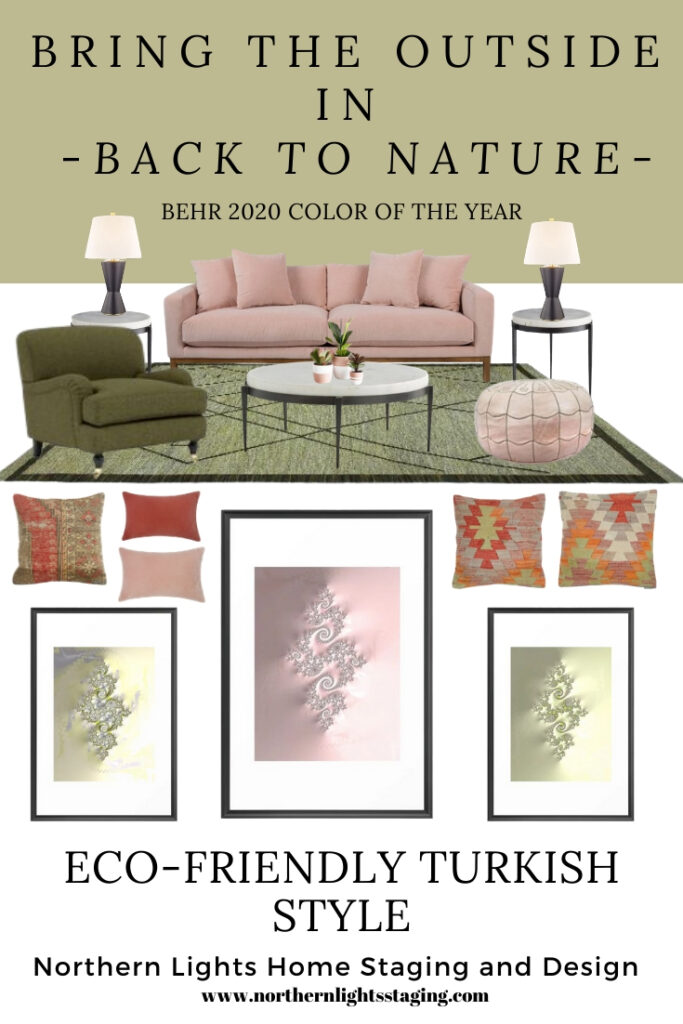
Here is an example of how you can pull together all the ideas that I mentioned. I created this global style, eco-friendly design for a living room using Behr’s color of the year, Back to Nature. This design uses elements of Turkish style, with a beautiful handmade, authentic new kilim rug that has many of the traditional elements of true vintage Turkish Kilims. It is 10 x 13 and made of wool, so is eco-friendly. The Kilim pillow covers, (pillow 1, pillow 2, and pillow 3) are hand woven and made of 40-50 years old Turkish kilim fragments backed with cotton cloth. You can get 5% off the rug and pillows and anything you like at Kilim.com with code nls2019 at check out. I adore the soft look of the pink velvet sofa, which also comes in a beautiful shade very close to Back to Nature. The velvet lumbar pillows come in both coral and moss colors. The clean hour-glass shape of the black lamps go beautifully with the design of the Turkish rug. I also love the pink Moroccan pouf! The iron and marble side tables and coffee table add a modern, simple element and are eco-friendly.
Recommendations contain affiliate links, meaning they give me a small commission for sharing at no additional cost to you.
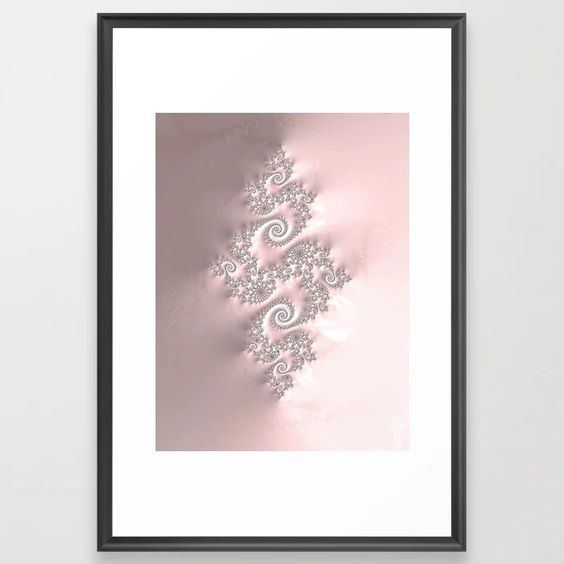
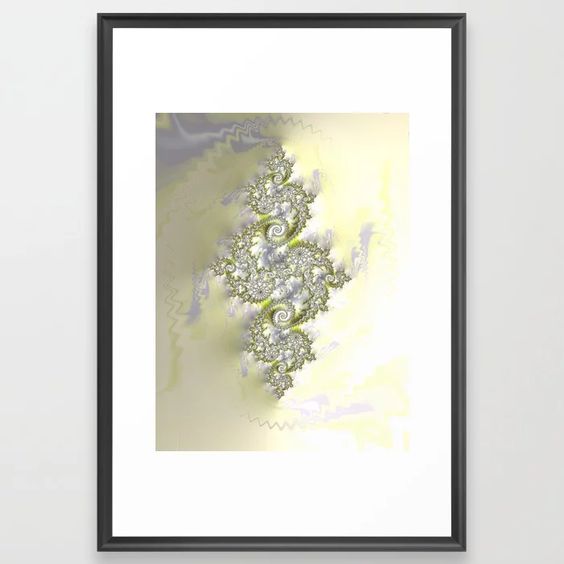
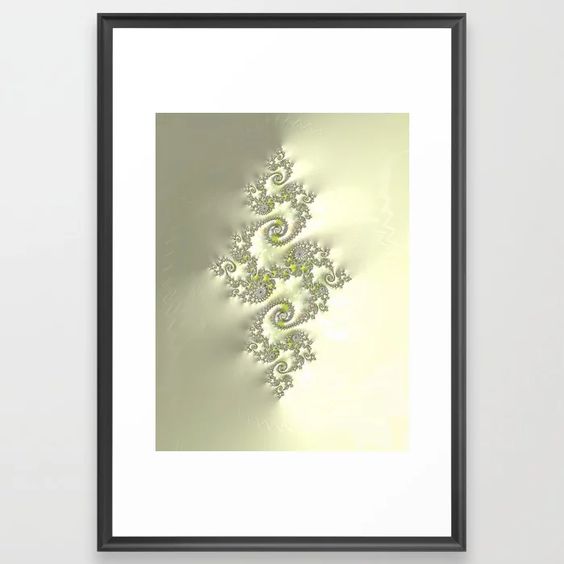
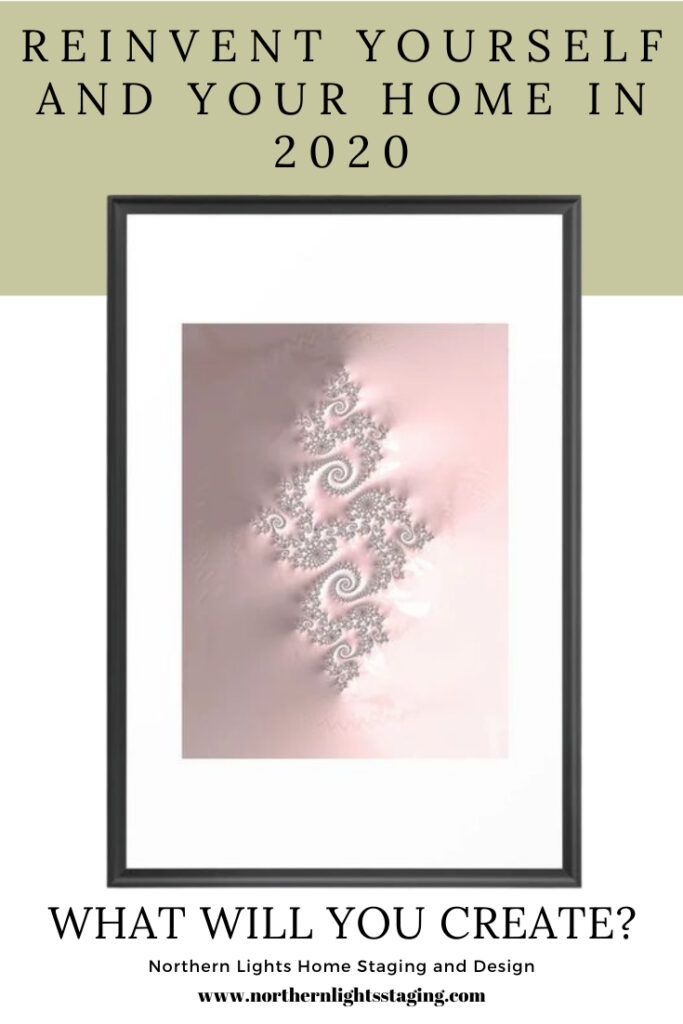
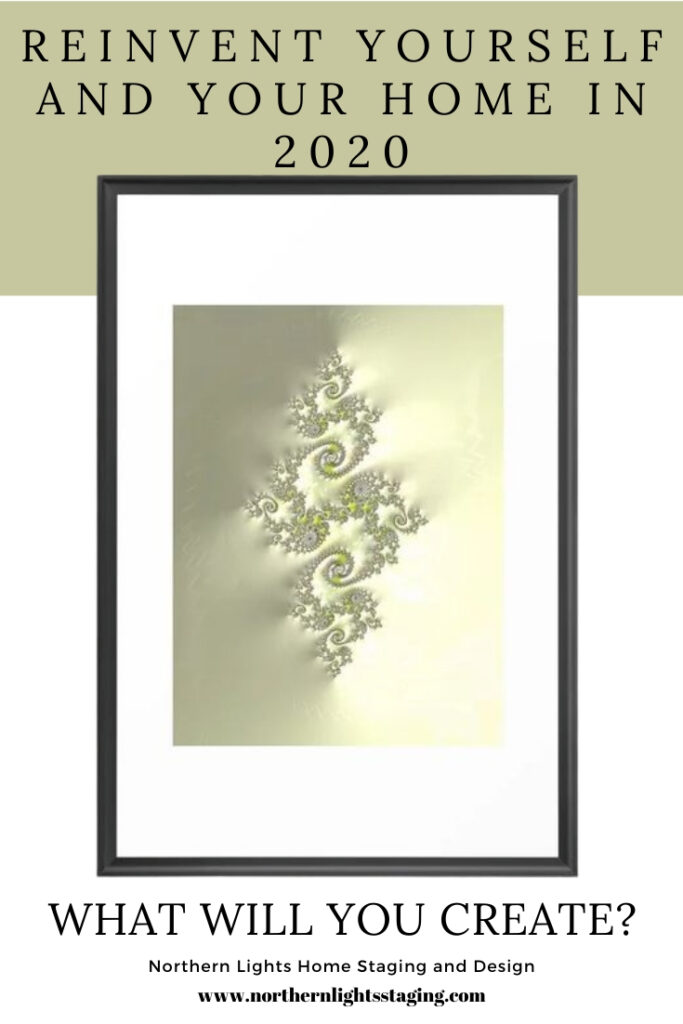
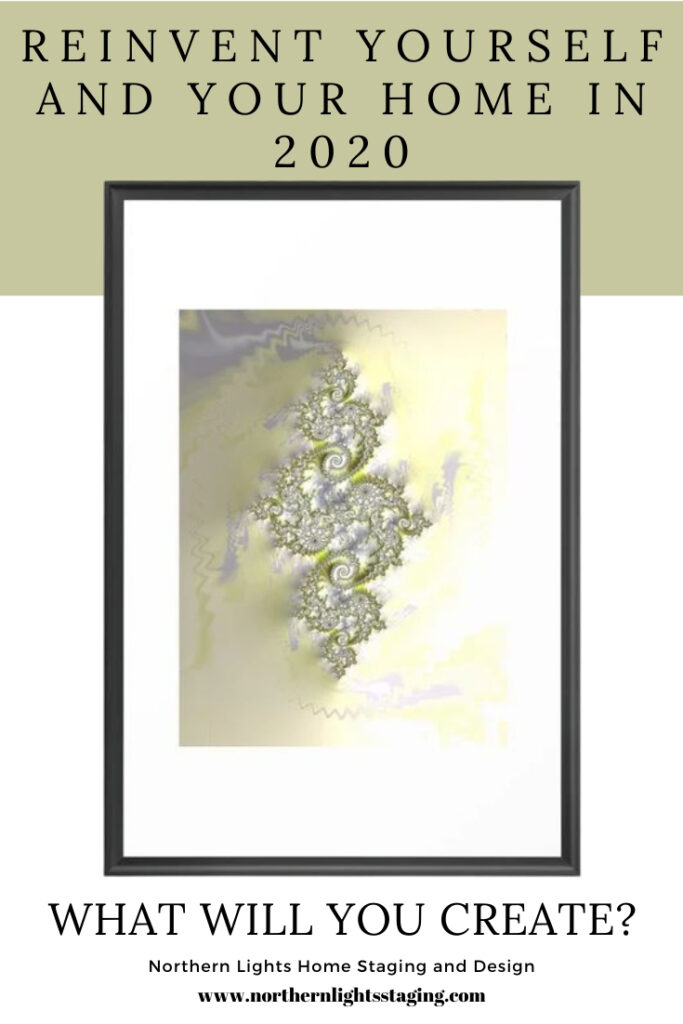
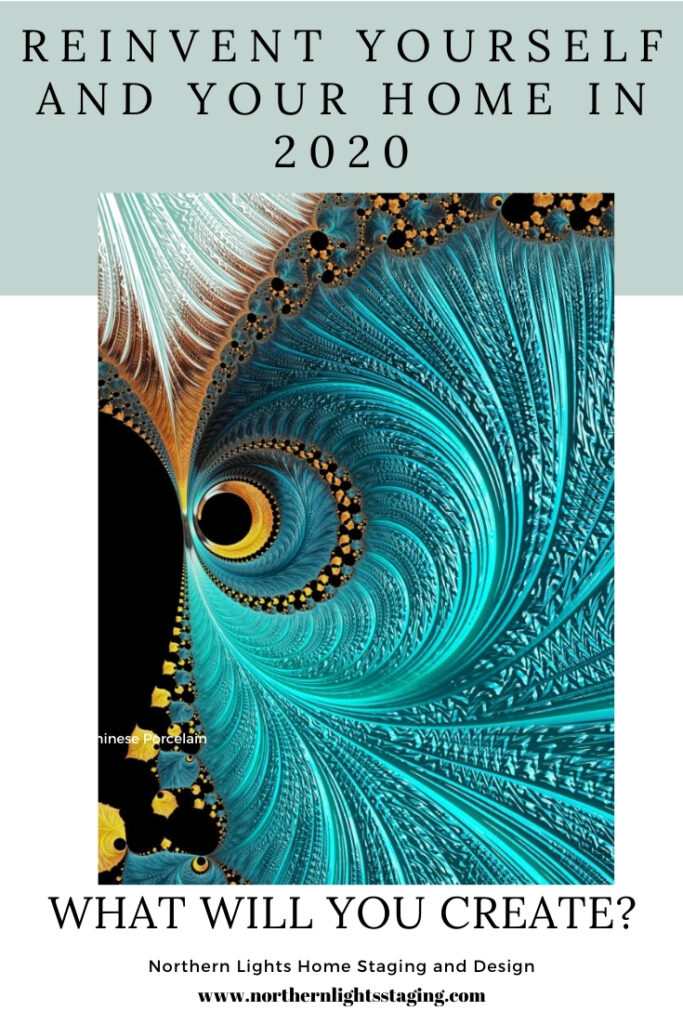
I created fractal art for this design to work with both Turkish style and the color Back to Nature. I think these elements would also go beautifully with Benjamin Moore’s First Light. The three designs, called Connection, Connecting and Connect work together and are available at my store on Society6. Learn more about my fractal art in my article Fractal Art for Interior Design.
Connection- Fractal art by Mary Ann Benoit of Northern Lights Home Staging and Design.
Connecting- Fractal art by Mary Ann Benoit of Northern Lights Home Staging and Design.
Connect- Fractal art by Mary Ann Benoit of Northern Lights Home Staging and Design.
As I write this article, I realize that even though I was not thinking about design “trends”, the colors of the year perfectly reflect the direction I want to go in 2020. I assume many others feel the same, as the colors of the year tend to reflect the direction our culture is moving.
I hope this article inspires you to be your best self in the coming year and gives you a few ideas to get there. Happy New Year!
Need Help with Your Colors?
If you are ready to make a change, I’m here to help. Why not start with a color consultation. Learn more.